Safety
Safety is the whole job
Diving is safe when it is planned well. Here is how we plan every dive.
On every trip
What happens before you get wet
Dock briefing
Twenty minutes: the site, depth and time limits, currents, exit plan and signals.
Buddy checks
Every pair checks air, weights, releases and inflators. A crew member checks again.
Roll call
Names are counted off the boat and back on. Nobody is left behind, ever.
Planned limits
Max depth and time for every site, with a safety stop at 15 ft on every dive.
Emergency kit
Oxygen, first aid and a radio on board
Both boats carry emergency oxygen for two divers, a full first aid kit, an AED, a VHF radio and a satellite phone. The nearest hospital is 15 minutes from our dock, and our captains know the Coast Guard station by name.
- All crew trained in oxygen first aid and CPR
- Emergency drills every month
- Dive accident insurance recommended for all guests
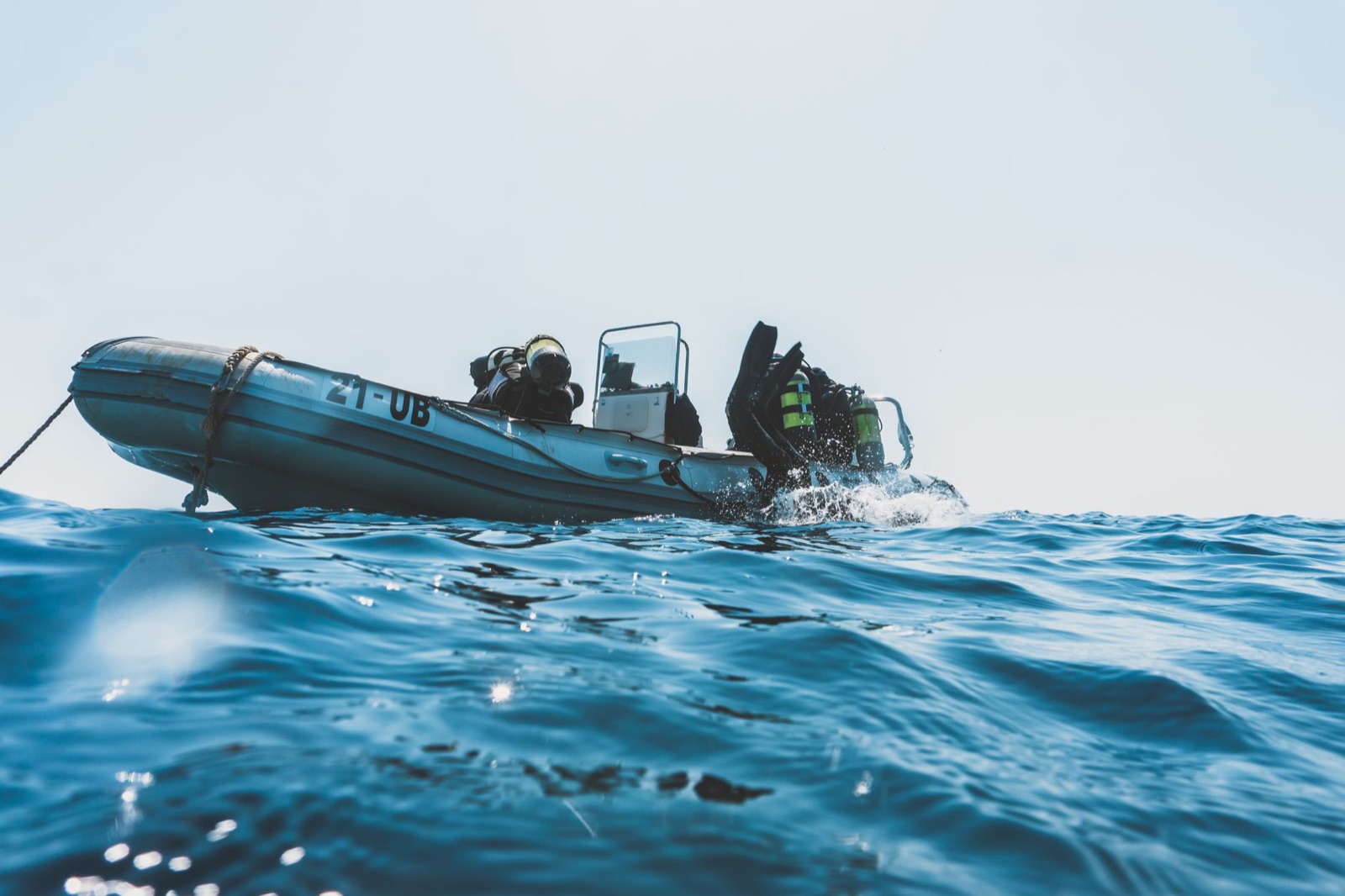
Weather and sea
When we do not go
Wind over 20 knots
We cancel or move to sheltered sites. You choose a refund or another day.
Small craft advisory
No trips run under a National Weather Service small craft advisory.
Lightning
Boats return at the first lightning within 10 miles. Divers are recalled with a signal.
Reef care
Protecting what we dive
Mooring buoys only
We tie up to sanctuary buoys and never drop an anchor on the reef.
Hands off
No gloves, no touching, no feeding. We brief it on every trip.
Reef-safe sunscreen
Mineral sunscreen on board, free. Others stay in your bag.
Reef surveys
Twice a year our team counts fish and coral for the marine sanctuary.
FAQ
Safety questions
What is your guide-to-diver ratio?
One guide for every six certified divers, and one instructor for every four students on courses.
Do I need dive insurance?
We strongly recommend it. Dive accident cover costs about $50 a year and pays for emergency care.
What if I feel unwell on the boat?
Tell the crew right away. Sitting out a dive is always fine and never questioned.